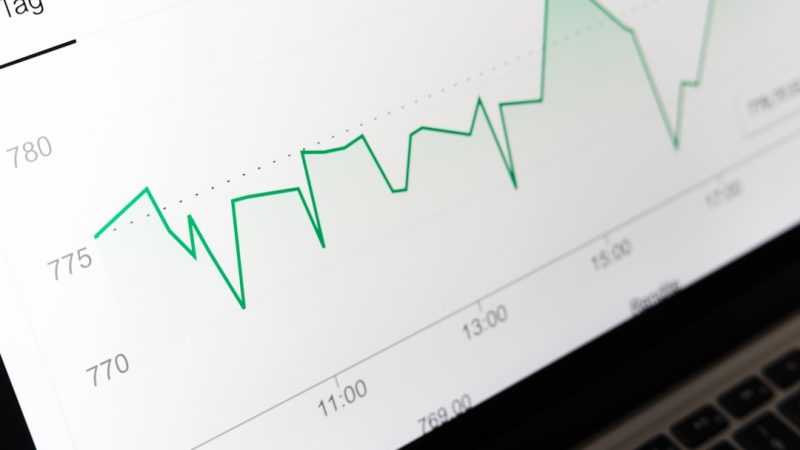
When a central bank governor pauses half a beat too long before answering a journalist’s question, algorithmic trading systems now register the hesitation as data. That is not hyperbole — sentiment analysis tools parsing live audio feeds have become a genuine fixture of institutional trading floors, illustrating just how radically the relationship between information and capital markets has shifted over the past decade. Speed and access to accurate, timely data are no longer simply advantages. For a growing number of market participants, they are survival requirements.
From the Trading Pit to the Data Feed
The open-outcry trading pit, with its hand signals and shouted bids, was fundamentally a system for transmitting information through human bodies at the maximum speed human bodies allowed. Electronic trading eliminated that bottleneck, but it also exposed a new frontier of inequality: the gap between those with institutional-grade data infrastructure and those without. Retail participation in equities, derivatives, and currency markets has surged in the post-pandemic era, yet the informational asymmetry between large players and individual investors remains stubbornly wide.
Equity markets globally now see the majority of daily volume executed by algorithmic or high-frequency systems. These systems do not trade on hunches — they trade on structured data: earnings releases, macroeconomic indicators, geopolitical signals, and increasingly, alternative datasets derived from satellite imagery, credit-card transaction aggregates, and web-scraping operations. The question of who has access to what information, and when, has become one of the central ethical and competitive debates in modern finance.
The Democratisation Debate: Promise Versus Reality
Advocates of financial technology argue that the internet has broadly levelled the playing field. Commission-free brokerages, fractional share ownership, and the widespread availability of market data have made participation more accessible than at any prior point in history. There is truth in that claim. A trader in Manila or Nairobi can now access real-time price feeds and analytical tools that would have required a Bloomberg terminal subscription a generation ago.
Yet access to raw data is not the same as access to insight. The proliferation of financial content online — from social media influencers posting options strategies to YouTube channels offering technical analysis — has created a noisy information environment where distinguishing credible, actionable intelligence from entertainment dressed as expertise has become genuinely difficult. Platforms aggregating structured financial trading information alongside broader economic news serve a real need in this context, helping readers situate market movements within the wider geopolitical and macroeconomic narratives that drive them.
The educational gap remains consequential. Retail investors who entered markets during the 2020–2021 period of extraordinary volatility and stimulus-driven rallies did not, as a cohort, develop the risk frameworks that seasoned traders build over years of market cycles. When conditions normalised and volatility returned to fixed-income and currency markets, the adjustment was painful for many. Information abundance, it turns out, does not automatically confer understanding.
Macro Signals and the New Market Literacy
What professional traders understood long before the retail boom is that markets do not price assets in isolation — they price them relative to everything else simultaneously. The interest rate environment, currency cross-rates, commodity supply chains, and political risk all interact in ways that make single-asset analysis an increasingly incomplete tool. The period since 2022 has been a particularly vivid demonstration: bond markets repricing aggressively in response to inflation data forced equity valuations to recalibrate, while currency markets absorbed diverging central bank policies across major economies with considerable turbulence.
For participants trying to navigate this interconnected landscape, the concept of market literacy has expanded considerably. It now encompasses not just the ability to read a balance sheet or understand a derivatives contract, but to process macroeconomic releases in context, interpret central bank communication with appropriate nuance, and recognise when geopolitical developments carry genuine market-moving weight versus when they are noise. This is a substantially higher bar than the market literacy discussions of even fifteen years ago.
Technology as Enabler — and as Risk
Artificial intelligence tools are now being deployed at every layer of the investment process, from portfolio construction to risk management to trade execution. Their proliferation raises legitimate questions about systemic fragility. When multiple systems, trained on similar data and optimised for similar objectives, react simultaneously to the same signal, the potential for liquidity crises and flash crashes does not diminish — it intensifies. Regulators across major jurisdictions are wrestling with oversight frameworks that were largely designed for human decision-making and are straining to accommodate the speed and opacity of machine-driven markets.
The transformation of global financial markets from human-mediated to data-driven systems has happened faster than the institutions meant to govern them could adapt. The open-outcry pit was inefficient, but its inefficiencies were legible. What comes next will demand not just faster data, but a deeper, more widely distributed capacity to interpret what that data actually means — which may prove to be the harder problem to solve.